
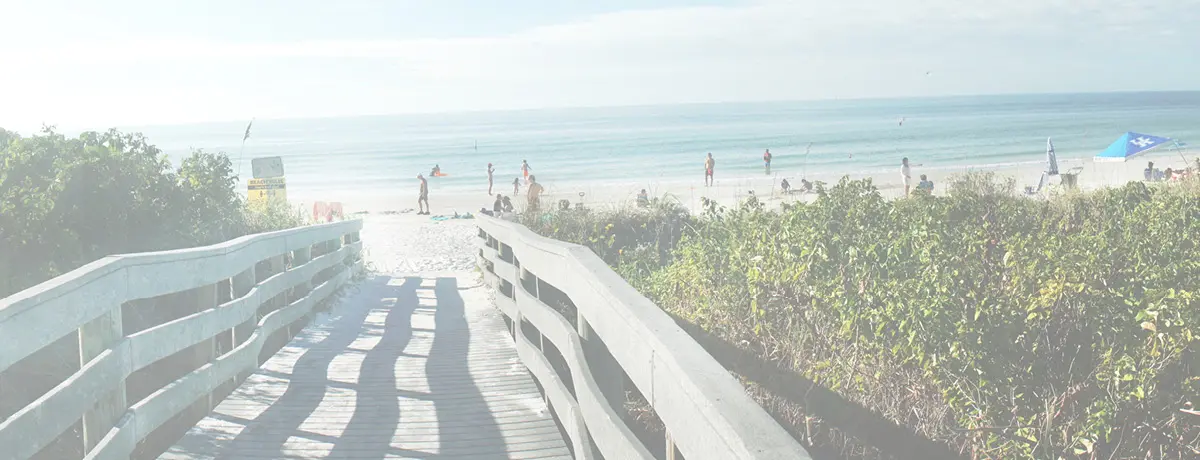
In 1954, a boy growing up a few blocks from the ocean in Palm Beach, Florida, began spending his weekends on his neighborhood beach. More than 70 years later, he still visits that beach with his grandchildren in tow. He is far from alone. For generations, neighbors, surfers, hotel guests and visitors from West Palm Beach used the same sand to sunbathe, picnic, surf and walk their dogs. In almost seven decades, no beachfront property owner ever objected to such use.
That changed in 2020. When the COVID-19 pandemic drove people outdoors, a few beachfront owners, who had first complained about increased public use only the year before, insisted that the neighborhood beach was private. Some owners placed wooden posts in the dry sand and asked the Town to assist in keeping the public off. The beachgoers responded in force, reaching out to elected officials and attending public meetings to defend their longstanding use.
The Town was caught in the middle. The owners held title to the sand and wanted the public removed, while the longtime beachgoers considered it public since no owner had ever objected to the use. The owners ultimately sued in state and federal court, arguing that the Town’s refusal to remove the public was an uncompensated taking in violation of the Florida and U.S. constitutions.
This year, after separate bench trials, both courts rejected that claim. The dispute underlying these cases is still playing out on nearly every American coastline: to what extent can members of the public gain the right to make traditional use of dry sand beach that is privately owned?
- Who controls privately owned beach sand? Palm Beach cases show that decades of uninterrupted public use may limit an owner’s ability to exclude beachgoers, even when deeds identify the sand as private.
- Two courts rejected takings claims after finding evidence of public use dating to the 1950s, including surfing, walking, picnicking and sunbathing.
- Local governments should preserve testimony, photographs, maintenance records and patrol data. Owners should investigate historic use, easements and publicly funded renourishment before closing.
- The article explains how beach history can shape property rights, litigation strategy and development decisions nationwide.
A Question Every Coastline Faces
In Florida, the beach below the mean high-water or erosion control line belongs to the state and is held in trust for the public under the Florida Constitution. Disputes arise over the dry sand above that line, much of which is privately owned. Florida is not alone. Rising property values, erosion and demand for coastal recreation have forced states nationwide to decide who may use the dry sand. Several states have recognized rights arising from historic use, enacted statutes defining public access or extended the public trust doctrine onto private sand.
Long-Term Use Rights
Oregon and Hawaii recognize rights rooted in long-term use. The Oregon Supreme Court held in 1969 that the public had acquired, by custom, the right to use the dry sand between the high tide line and the vegetation line along the state’s entire ocean shore. Owners keep title but cannot exclude the public. Hawaii goes further. Drawing on ancient Hawaiian custom, its courts place the boundary between public and private land at the upper reach of the waves, usually the vegetation line, such that the entire beach below that line is publicly owned.
Statutory Rights
Texas relies on its Open Beaches Act to guarantee public access to the beach between mean low tide and the vegetation line, but only where the public acquired the right by prescription, dedication or long custom. The Rhode Island Supreme Court placed the landward edge of the public’s constitutional “privileges of the shore” at the mean high tide line in 1982. After the legislature moved that edge 10 feet landward of the visible high-tide line in 2023, a trial court found a taking of private property without compensation; the state’s appeal is pending.
Public Trust Doctrine
New Jersey and North Carolina take a third approach rooted in the public trust doctrine, which traditionally protects public use below the high-water line only. Both states extend the doctrine onto private dry sand, but to different degrees. New Jersey extends it only as far as reasonably necessary for the public to reach and enjoy the ocean. Its courts weigh the location of the dry sand, availability of public beaches nearby, public demand and the owner’s own use, so the answer differs from beach to beach. North Carolina goes further, holding, based on state statute, that public trust rights extend across the entire dry sand beach, up to the vegetation line, on all the state’s ocean beaches.
These three approaches differ in source, extent and durability. Custom looks back to prior use, while statutes and public trust expansions often look forward. Oregon, Texas and New Jersey give the public a right to use privately owned sand, while Hawaii places the beach in public ownership. Rights grounded in proven historic use have generally survived takings challenges, while boundaries redrawn without such evidence have proven most vulnerable.
Recognizing Rights or Creating Them
Beneath these approaches lies a single question of takings law: Is the government acknowledging an existing use right or burden on the property, or adding a new one?
Some limits come with the title through history. Custom, prescription and dedication recognize rights grown from the public’s past use or the owner’s own conduct. Under Lucas v. South Carolina Coastal Council (1992), the government owes no compensation when it enforces a limitation that was already part of the owner’s title. Even Cedar Point Nursery v. Hassid (2021), which protected an owner’s right to exclude, recognized that access consistent with longstanding background restrictions on property is not a taking.
Others come with the title through law: a properly enacted law, adopted with compensation or as a condition of a benefit the owner accepts, becomes part of the property, and later owners generally take title subject to it. For example, public use statutes related to beach restoration and public trust expansions create rights by law. However, new burdens imposed without compensation or consent, like Rhode Island’s 2023 legislative expansion, may invite takings claims.
Florida uses both tools. It recognizes rights grounded in the public’s historic use of its beaches and creates additional statutory protection for those same uses on new sand added by publicly financed renourishment projects.
One route premised upon past use is customary use, adopted by the Florida Supreme Court from English common law in City of Daytona Beach v. Tona-Rama, Inc. (1974). If the public’s recreational use of the dry sand has been “ancient, reasonable, without interruption and free from dispute,” the owner may not interfere with it. The public acquires a right of use, not ownership, and the owner cannot revoke it. Proof of use in the general area is enough, and custom, unlike a prescriptive easement, applies even where the owner gave permission.
Customary use is often raised as a defense but can also be asserted affirmatively by ordinance. Redington Beach, a small Pinellas County, Florida, town offers the clearest recent test of the doctrine’s affirmative use. After beachfront owners challenged its 2018 customary use ordinance, the 11th Circuit held in Buending v. Town of Redington Beach that a town could establish common law customary use with reference to the general area of the beach, not the individual parcel, and need not show the use was adverse to the owner. On remand, the Town prevailed at a 2024 bench trial on a record of historical evidence, three generations of resident testimony and decades of public beach maintenance. A second appeal is pending, but the case shows that customary use can be proved with a record built well before the lawsuit arrives.
Florida’s beach restoration statute adds a second layer of protection. When public funds restore an eroded beach, the state fixes an erosion control line at the existing mean high-water line as the permanent boundary, a framework upheld by the Florida and U.S. Supreme Courts. Section 161.141 then subjects the new sand to a public easement for traditional uses “that would have been allowed prior to the need for the restoration project.”
The Palm Beach Cases
The beach in the Palm Beach cases is a half-mile stretch separated from a residential neighborhood by North Ocean Boulevard and a seawall waterward of the road. The privately owned sand runs 75 to 90 feet from the seawall to an erosion control line fixed by a public renourishment project in 2002. Public funds have been used to renourish the entire beach on multiple occasions since the early 2000s.
The owners’ deeds and plats identified the beach as private. When public use intensified, the owners asked the Town to enforce trespass. The Town declined to do so on advice of counsel and also enforced a beach structure ordinance prohibiting demarcation of the dry sand boundaries. The owners asserted their property was taken and sued.
The Town raised common law customary use and the section 161.141 statutory easement as defenses, in addition to arguing that failure to enforce trespass and the enforcement of its zoning code did not constitute a taking. Town witnesses included longtime residents (including a retired federal judge), Town officials, police captains, a local surf shop owner and the Town’s coastal engineer. None recalled any opposition to public use prior to 2019. Together, their testimony established each element of customary use. The public use was ancient, dating to at least the 1950s. The use was reasonable, consisting of sunbathing, picnicking, surfing and dog walking. It continued without interruption through erosion and renourishment to the present day. The public use had also been free from dispute for decades. No beachgoer had been asked to leave or to seek permission before 2019.
The owners’ evidence did not contradict that record. Most of their witnesses were seasonal residents who could not say how the beach was used before they bought or when they lived elsewhere. Many acknowledged allowing the public to use their beach. In state court, the owners relied on public records, like plats or comprehensive plans, to assert that no public right could have arisen where it was not documented. The state court focused on the actual use regardless of the recorded instruments.
Under section 161.141, the Town had to prove two things. First, the public projects must have added sand on the private upland property, which the project engineer confirmed and the owners did not dispute. Second, the public’s traditional uses had to have been “allowed” before the need for the renourishment projects. The customary use evidence readily answered the second question where public use began some 50 years before the first public renourishment in 2003.
After trial, the state court held that the Town established all four elements of customary use by a preponderance of the evidence and recognized the statutory easement. The federal court reached a similar result after trial, noting that even if a heightened burden of proof applied as plaintiffs asserted, the Town’s evidence more than satisfied that standard too. Plaintiffs in the state court case have sought rehearing, while the federal case is on appeal to the 11th U.S. Circuit Court of Appeals.
Lessons for Local Governments and Beachfront Owners
As owners backed by national interests, such as the Pacific Legal Foundation, which represented the plaintiff in the federal case, press the right to exclude, these disputes will turn less on what the deed says and more on who can prove what happened on the sand. The Palm Beach cases offer practical lessons for local governments and beachfront owners.
For local governments, the key is documenting known public beach use through recorded testimony, dated photographs, and patrol, maintenance and event records. A Florida municipality may adopt a customary use ordinance but must be prepared to prove the custom in court.
For beachfront owners, thorough diligence before closing should reveal the boundaries of the privately owned dry sand: any recorded erosion control line, the renourishment history, any easements and how the beach has actually been used. The public’s use rights may have been established before the property was purchased. Tolerating public use does not preserve the right to exclude, and accepting publicly funded renourishment can create a public easement.
In sum, the answer to “whose sand is it?” often lies less in the deed than in the memories of the people who have walked it. Until the appellate courts weigh in, owners and municipalities alike should treat a beach’s history as part of its title.
~
Joanne M. O’Connor is a Jones Foster shareholder and a Florida Bar Board Certified specialist in Business Litigation. As Town Attorney for the Town of Palm Beach, she oversees the town’s civil litigation and advises the town on all aspects of its legal operations, including land use and zoning matters, contracts and procurement, and ordinances and regulations. O’Connor also represents businesses, individuals and governmental entities in complex commercial, real estate and land use litigation throughout Florida.
Lainey W. Francisco is a Jones Foster attorney whose practice spans land use, governmental law and complex commercial litigation. She advises local governments on a range of matters, including planning and zoning, public records and Sunshine Law compliance. For private landowners, she handles real estate and land use issues from zoning and permitting through development approvals and property rights disputes. She also counsels businesses and agricultural interests in contract disputes and other business matters.
Roberto M. Vargas is a Jones Foster shareholder and co-chair of the firm’s Complex Litigation & Dispute Resolution department. He is a member of the firm’s Complex Trial Team and focuses on eminent domain, commercial litigation, business torts and real property litigation in state and federal courts throughout Florida.